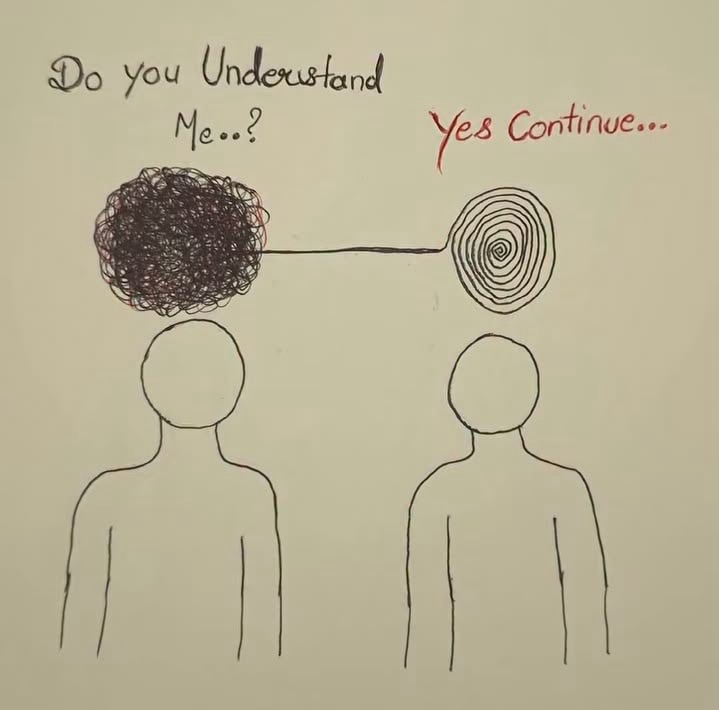
We often assume that sharing a language is enough to understand one another. Yet everyday interactions show that communication is far more complex. This article explores why misunderstandings occur even when language seems to be shared, and what this reveals about the relationship between language, culture and meaning.
More than words
Understanding is often associated with vocabulary and grammar. If two people speak the same language, communication is expected to be straightforward. In reality, this assumption is frequently challenged.
Words do not exist in isolation. They are shaped by context, tone, intention and cultural background. The same sentence can be interpreted in different ways depending on who is speaking, who is listening, and in which situation the interaction takes place.
As a result, communication cannot be reduced to linguistic competence alone.
The role of cultural frameworks
Miscommunication often arises from differences that are less visible than language itself. Cultural norms influence how people express agreement, disagreement, politeness or criticism.
For example, what is considered direct and efficient in one context may be perceived as rude in another. Similarly, indirect communication, which can signal politeness in some cultures, may be interpreted as unclear or evasive elsewhere.
These differences do not necessarily lead to conflict, but they can create subtle misunderstandings that affect relationships and collaboration.
When understanding fails
Misunderstandings are not always obvious. In many cases, people believe they have understood each other, while in reality they have interpreted the same message differently.
This can happen in everyday conversations, but it becomes particularly relevant in professional, educational and institutional contexts. In such environments, lack of clarity can lead to confusion, exclusion or unequal access to information.
The consequences of miscommunication, therefore, go beyond simple inconvenience. They can shape participation and decision-making.
Rethinking communication
If understanding is not guaranteed by language alone, communication must be approached differently. It requires attention to context, awareness of cultural differences and a willingness to adapt.
This does not mean eliminating misunderstandings entirely, but recognising that communication is a dynamic process. Meaning is not simply transmitted; it is negotiated.
In this sense, communication becomes less about speaking correctly and more about creating the conditions for mutual understanding.
Final reflections
The idea that language automatically ensures understanding is appealing, but ultimately limited. Communication is shaped by a complex interaction of linguistic, cultural and contextual factors.
Recognising this complexity allows for a more realistic approach to interaction across languages and cultures. It also highlights the importance of awareness, flexibility and responsibility in how we communicate with others.
 Giulia-writes
Leave a comment